


 江波龍電子丨商業往事第69話:每一件事都可以有策略

商業往事
每月分享幾則有趣的商業小故事(中英雙語),邀請大家和我們一起透過歷史故事,看存儲商業。

每一件事都可以有策略
本文總計2696字
預計閱讀9分鐘
(英文文章在中文文章之后)
你渴望的任何東西,你幾乎都會找到一種方法來得到它。
我們稱一次能吃很多食物的人為大胃王。在日本,有一個著名的大胃王叫小林尊。但是如果只是看照片,你不會看出小林尊居然是個大胃王。他的身材有修瘦小,身高只有五呎八吋。但是,他應該是有一個強壯的胃。小時候他總是能夠把餐盤清光光,有時甚至連妹妹的盤子也順便清光。
2000年秋,小林尊在三重縣四日市大學念經濟學。他和女朋友住在一起。他們兩人都來自貧困家庭。他們已經拖欠了房租一陣子了。只能在公寓里點著蠟燭取光,因為他們暫時付不起電費。
小林尊的女友聽說有電視上有一場大胃王比賽,比賽的獲勝者可以賺到5000美元。小林尊的女朋友知道小林尊在吃的方面頗有天賦,于是她寄了一張明信片幫他報名,卻沒有告訴他。
小林尊在知道自己要參加比賽后,雖然不大情愿,還是勉強的同意了要參加比賽。小林尊在大學里學到了博弈理論,小林尊要實際應用他所學博弈論。他知道,如果他想贏得比賽,他需要一個獲勝的策略。于是他觀看了電視轉播的大胃王比賽,發現大多數選手在預賽中吃太多,吃太快了。因此,他們的胃在最后幾輪再也吃不下。比賽分為四個階段。小林尊的策略是只要進階到下一階段就好了,不需要吃超過必要的。通過這種方式,他可以把胃的空間留給最后階段的比賽。這個策略與奧克蘭運動家隊在電影《魔球》中采用的策略相似。這個球隊沒有追求球員要有最好的打擊率,他們只要球員能上壘就好,然后一個一個的打球,把球員送回本壘得分。
贏得比賽后,小林尊繼續在日本大胃王比賽賺到錢。然而,他渴望繼續成為一名專業的大胃王選手。他把目光投向了每年7月4日在紐約市舉行的國際著名的奈森熱狗吃大賽。這個特殊的比賽被認為大胃王世界的「超級杯」。這個比賽在科尼島已經舉辦了四十多年,還能吸引了超過一百萬的觀眾在ESPN頻道觀賞。
這個比賽的規則很簡單。參賽者在12分鐘內盡可能吃更多的熱狗和面包(稱為HBD)。參賽者可以添加調味品和飲料,以幫助他們吞下更多的熱狗面包。各種飲料或調味品都可以,也不受任何數量限制。當最后結束的鈴響時,參賽者嘴里的任何熱狗或即使只有一部分也可以計算為分數。可是,這些熱狗面包在參賽者的嘴里,都必須隨后吞下去。如果參賽者把這些熱狗面包吐出來,他會被取消資格。這種情況被稱為「命運的逆轉」。
小林尊決定參加2001年內森的比賽。當時的保有記錄是在12分鐘內達到25又1/8的熱狗面包。
那么小林尊參加這次比賽的總成績是如何呢?你不會相信的,他吃了 50 個面包熱狗,對, 50 個!這幾乎是之前記錄的兩倍,也就是在比賽的12分鐘里,每分鐘要吃超過4個面包熱狗。第二年,小林尊再次贏得比賽,以及之后的四年,他都贏得了冠軍。在他贏得比賽的期間,他把記錄推高到53個又3/4個面包熱狗。過去,從沒有一個人可以連續三次贏得冠軍,更不用說連續六次了。
剛開始,小林尊的表現受到質疑。一些對手懷疑他作弊了。例如,也許他服用某種肌肉松弛劑或某種物質來抑制反胃。或者傳說他還吞下了石頭以擴大他的胃部。還有一些人推測,日本醫生在小林尊身上多裝了了一個食道或胃,來幫助他獲勝。
然而,這些謠言大多太過牽強。似乎更合理的是,他真的吃掉這么多這么快。那為什么小林尊的能力為何比其他參賽者高出這么多呢?
小林尊觀察到,大多數參賽者都采用了類似的策略,也就是根本沒有策略。他們的策略就像是普通人吃熱狗的加速版:把熱狗的一端塞進嘴里,咀嚼和吞咽,然后重復這個過程,直到熱狗被吃掉,他們可能停下來喝一杯把飲料幫助吞咽。但小林尊想知道,應該有更好的方法來消耗熱狗,可以幫助他獲贏得比賽。經過深思熟慮和練習,他想出了自己的策略,一個真正的策略,用來贏得勝利。
小林尊的策略之一是:重新定義比賽。小林尊把比賽認為是一項嚴肅的運動,而不是一項游戲。一旦大胃王比賽被定義為運動,那運動就需要身心的緊密訓練,這和任何運動都一樣,以及一個深思熟慮贏的策略。此外,小林尊的做法與他的競爭對手不同。他的競爭對手會問:「我怎樣才能吃更多的熱狗?」小林尊則問:「我怎樣才能讓熱狗更容易吃?」
小林尊進行了實驗,并收集了數據。他把自己關起來,有條不紊地練習。他花了幾個月的時間嘗試各種方法,使他的胃能夠吃下更多的食物。他記錄了所有做法的數據,以便他能夠評估這些數據,以提高大胃王的有效性,并克服因暴食而嘔吐的沖動。這種集中的練習和分析是乏味的過程。然而,如果一個人想成為這個最好的人,這個過程絕對是必要的。
小林尊做的另一件事是: 拒絕接受極限。他質疑那些參加這種大胃王競賽的人普遍接受的極限。例如,當他開始訓練時,他拒絕接受25個又1/8個面包熱狗是人體的極限。他認為,現在的那些記錄毫無意義,因為以前的競爭對手可能沒有進行過科學訓練。他認為大多數參賽者誤解了比賽的挑戰,他則專注于如何使吞咽更多的面包熱狗變得更容易。
「關鍵是大腦,而不是心臟或肺部」,聲譽卓著受人尊敬的腦神經學科學家羅杰?班尼斯特這么說。
每個人都面臨著各種障礙——不管是身體上的、經濟上的、時間上的還是你所擁有的一切。有些障礙無疑是重大或真實的。但有些障礙是人類不必要的自我設限。人們常常對給定的系統,或者它能改變多少,常常在沒有任何實際證據,或經過分析的情況下就接受了。這種未經驗證的期望,會造成了人為的障礙,限制了我們的想象力,阻礙了我們的創造力。我們應該忽略它們。
解決問題本身已經夠難了,如果家給了不要的限制,問題會變得更難。只有我們不限制我們的預期,問題才能夠得到解決。如果有人懷疑人為限制的負面力量,請想象以下狀況:如果你把跑五公里作為你的目標,你可能會發現自己在跑完三公里后會感到很累。然而,如果你把目標定在十公里,你可能跑了五六公里都不會感到疲倦。只有遠遠超過目標,你才會感到疲倦。
小林尊教給我們的另一件事是,幾乎任何能力都可以通過訓練來提高,無論天賦能力如何。總的來說,小林尊出色的大胃王表現,并不是他天賦的自然能力。相反,這是透過方法培訓和有見地的創新的結果。
這種障礙往往是人為的,小林尊在連續贏了六年之后,被美國大胃王喬伊「嚼」切斯納超越的事實就證明了這一點。切斯納后來繼續贏得七連勝,超過了小林尊的六連勝紀錄。栗子在短短 10 分鐘內吃掉了 69 個 面包熱狗 (為了安全起見2008 年比賽縮短了 2 分鐘)。某些小林尊的競爭者也模仿小林某些作法,他們全都發現,吃下40,50份面包熱狗曾被視為不可能做到的事情,但顯然不是。
結論:
無論你試圖解決什么問題,在你投入時間和精力之前,都應該去了解真正的問題。有些事情可能比想象的簡單,而有些事情可能更復雜。通過分析問題,你會獲得更好的解決方案,而不需要反復的進行試驗。根據分析、定義問題,絕對是解決問題的第一步。如果你能很好地定義問題,你已經在通往有效解決方案的道路已經成功了一半。
Everything has a Winning Strategy
For almost anything that you have a strong desire for, you will find a way to get it.
We call a person who can consume much food at one time a big eater. In Japan, there is a famous big eater called Kobi (His real name is Takeru Kobayashi). But you wouldn’t know that Kobi was a big eater just from his picture. He had a slight build and is only five foot eight. However, he must have a strong stomach. When he was a child, he always cleaned his plate and sometimes cleaned his sisters’ plates too.
In the autumn of 2000, Kobi was a student studying economics at Yokkaichi University. He lived with his girlfriend. Both them came from poor families. They had been behind on their house rent and they lit candles in the apartment since they could not afford to pay the electricity bill for a while.
Kobi’s girlfriend heard that there was a televised eating competition and that the winner of the contest could pocket US$5,000. Knowing the talent for eating that Kobi had, she sent a postcard to sign him up without telling him.
Upon finding out that he had been entered into the contest, Kobi reluctantly agreed to participate. At his university, Kobi had been learning about game theory. He knew that if he wanted to win the game he would need a winning strategy. So he watched the televised eating contest and found that most contestants ate too fast and too much in the early rounds, As such, their stomachs couldn’t take in any more in the last rounds. For the contest, there were four stages. Kobi’s strategy was to get to the next stage without eating more than was necessary. Through this way, he could reserve space in his stomach for the last stage. This strategy is similar to the strategy that the Oakland Athletics used in the movie Moneyball. They didn’t pursue the best batting average for players but rather focused on getting multiple players on base.
After winning, Kobi went on to make more money from Japanese eating contests. However, he desired to go on to become a professional eating contestant. He set his sights on the internationally famous Nathan’s Hot Dog Eating Contest that is held annually on July 4th in New York City. This particular contest is kind of the “Super Bowl” of eating competitions. It has been held for over four decades at Coney Island and attracts more than one million viewers on ESPN.
The rules are very simple for this contest. Contestants try to eat as many hot dogs and buns (called HBD’s) as they can in 12 minutes. Contestants may add condiments and drink beverages to help them swallow the HBD’s. All kinds of beverages or condiments are allowed without any quantity limitation. When the final bell rings, any HBD or portion thereof that is in the contestant’s mouth is added to the contestant’s total count. However, these HBD’s or portions thereof that were in a contestant’s mouth must be subsequently swallowed. If a contestant spits any out, he or she is disqualified. Such a situation is called a “reversal of fortune.”
Kobi decided to attend the 2001 Nathan’s contest. The existing record at that time was 25 and 1/8 HBDs in 12 minutes.
So what was Kobi’s total for this contest? You won’t believe it. He ate 50 HBDs. Fifty! That was almost twice the previous record, and represented more than four HBDs (hot dogs and buns) per minute for 12 straight minutes. The following year, Kobi won the competition again, as well as the next four years after that. During his reign, he pushed the record up to 53? HDB’s. In the past, no champion had ever won more than three times in a row, much less six times in a row.
Initially, Kobi’s performance was doubted. Some rivals suspected that he had cheated. For example, perhaps he took some kind of muscle relaxant or some kind of substance to suppress the gag reflex. He was also rumored to have swallowed stones to expand his stomach. A few speculated that Japanese doctors had surgically implanted a second esophagus or stomach in Kobi to help him win.
However, most of these rumors were far-fetched. It seems more plausible that he really consumed so much so quickly than any of those rumor scenarios. Yet why was Kobi’s ability so much higher than that of the other contestants?
Kobi had observed that most of the contestants used a similar strategy, which wasn’t really much of a strategy at all. Their strategy was like a sped-up version of how the typical person eats a hot dog: cram one end of the hot dog into the mouth, chew and swallow, then repeat this process until the hot dog is consumed, possibly pausing to take a drink to wash things down. But Kobi wondered if perhaps there was a better way to consume hot dogs that could help him win. And after thinking about it and practising, he came up with his own strategy, a real strategy, to win.
One secret to Kobi’s strategy was to redefine the contest. Kobi regarded the contest as a serious exercise or sport, instead of as a game. And once the eating contest has been defined as such, it requires intense physical and mental training, just like any sport, as well as a well-thought out strategy. Moreover, Kobi’s approach was different from that of his competitors. Where his competitors asked “How can I eat more hot dogs?” Kobi asked “How can I make hot dogs easier to eat?”
Kobi conducted experiments and collected data. He isolated himself and practiced methodically. He spent several months trying various ways to make his stomach able to contain more food. He recorded the data from all his practices, such that he could evaluate it to improve the effectiveness of his eating technique, as well as conquer the urge to vomit from overeating. Such concentrated practice and analysis are tedious activities. However, they are necessary if one wants to be the best.
Another thing that Kobi did was to question the generally-accepted limitations for those participating in such eating contests. For example, when he began his training, he refused to accept that 25? HDB’s was anywhere near the maximum that was possible. He considered that the existing record was rather meaningless since prior competitors had likely not trained scientifically. He figured that most competitors misunderstood the challenges of the contest. He focused on how he could make it easier to swallow more HBD’s.
“It is the brain, not the heart or lungs, that is the critical organ,” said the esteemed neurologist Roger Bannister who is best known as the first human to run the mile in less than four minutes after redefining the problem and believing that he could set a new record.
Everyone faces barriers—be they physical, financial, temporal or what have you. Some of the barriers are unquestionably significant or real. But other barriers are unnecessarily erected by humans. People often form expectations about how well a given system can function, or how much it can change without any real proof or analysis. Such unsupported expectations create artificial barriers that limit our imagination and obstruct our creativity. We should ignore them.
Solving a problem is hard enough on its own and only gets harder if we unnecessarily limit our expectations for the ways that it could be solved. If one doubts the negative power of artificial limits, consider the following. If you made it your goal to run five kilometers, you’d probably find yourself getting pretty tired after about three kilometers. However, if you set your goal at ten kilometers, you might not get tired until five or six kilometers in, well past the point that you would have gotten tired had your distance goal only been five kilometers.
Another thing that Kobi teaches us is that almost any performance can be improved with training, regardless of natural ability. By and large, Kobi’s outstanding eating performance was not the result of natural ability. Rather, it was the result of methodological training and insightful innovation.
That barriers are often artificial is evidenced by the fact that Kobi was overtaken by the American eater Joey “Jaws” Chestnut after six years of dominance by Kobi. And Chestnut went on to win seven straight contests, surpassing Kobi’s record of six. Chestnut chucked down 69 HDB’s in just 10 minutes (the contest had been shortened by two minutes in 2008, likey for safety.) Some of Kobayashi’s rivals have copied certain strategies of his. All of them gained from the knowledge that 40 or 50 HDB, once considered a fantasy, plainly isn’t.
Conclusion:
No matter what problem you are trying to solve, you should spend your time and effort to really understand the problem before you put in the effort. Some things may be simpler than they at first appear, and other things may be more complicated. And by analysing the problem, you’ll get to a better solution without so much trial and error. Defining the problem based on analysis is absolutely the first step for solving problems. If you can define the problem well, you are already halfway down the road towards an effective solution.
-
嵌入式存儲
+關注
關注
0文章
29瀏覽量
11216
發布評論請先 登錄
GPS靠不住?其實從太空燈塔到光模塊,大家都在愁一件事:時間

端側AI進入爆發期,江波龍“集成存儲”引領AI PC/手機、可穿戴存儲創新
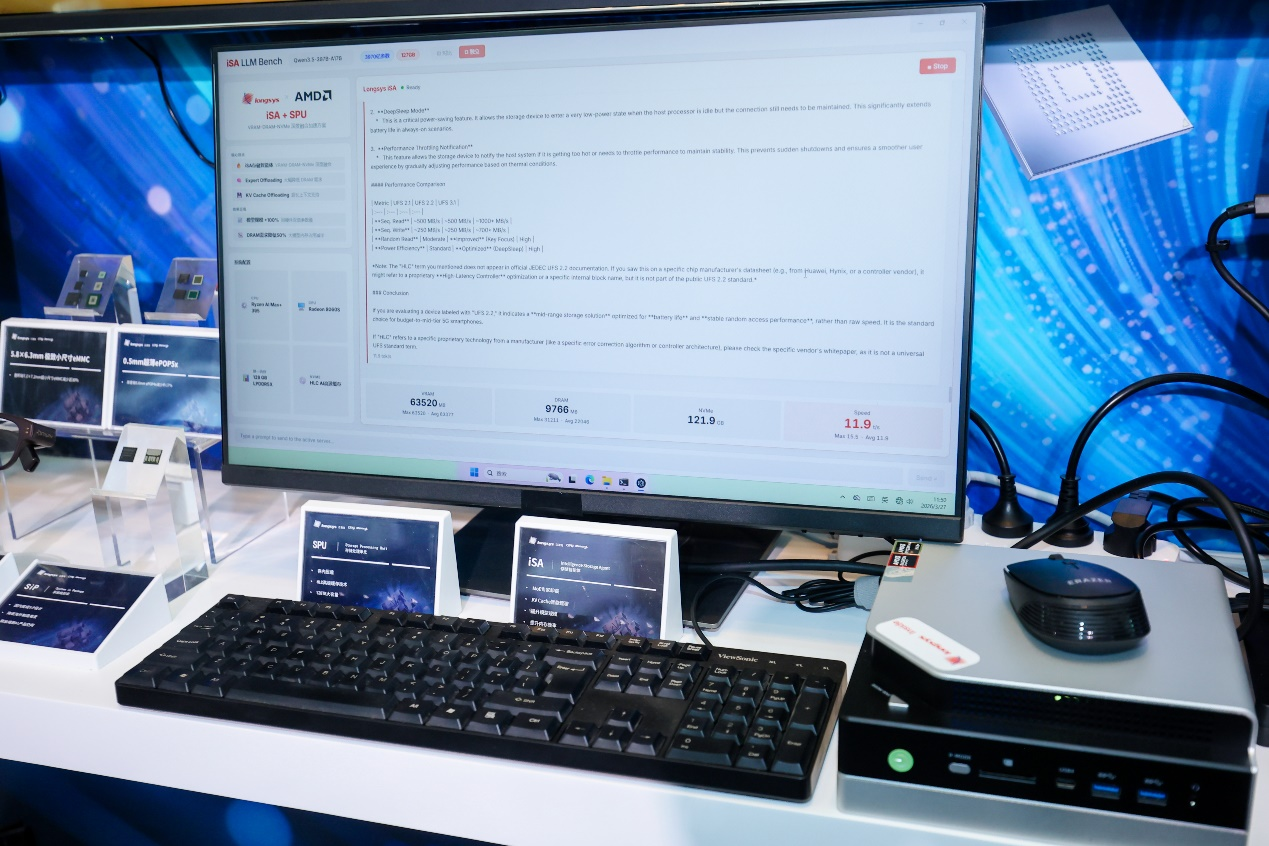
江波龍將亮相2026德國紐倫堡嵌入式展,以集成AI Storage賦能車載與具身智能創新

《當一個 MCU 原廠的型號超過 100 個,會發生什么?》
江波龍自研主控出貨破1億顆,mSSD、UFS4.1等率先布局未來增長
汽車自主決策,最怕走神?SJK TCXO 2016 保障每一秒穩定計算
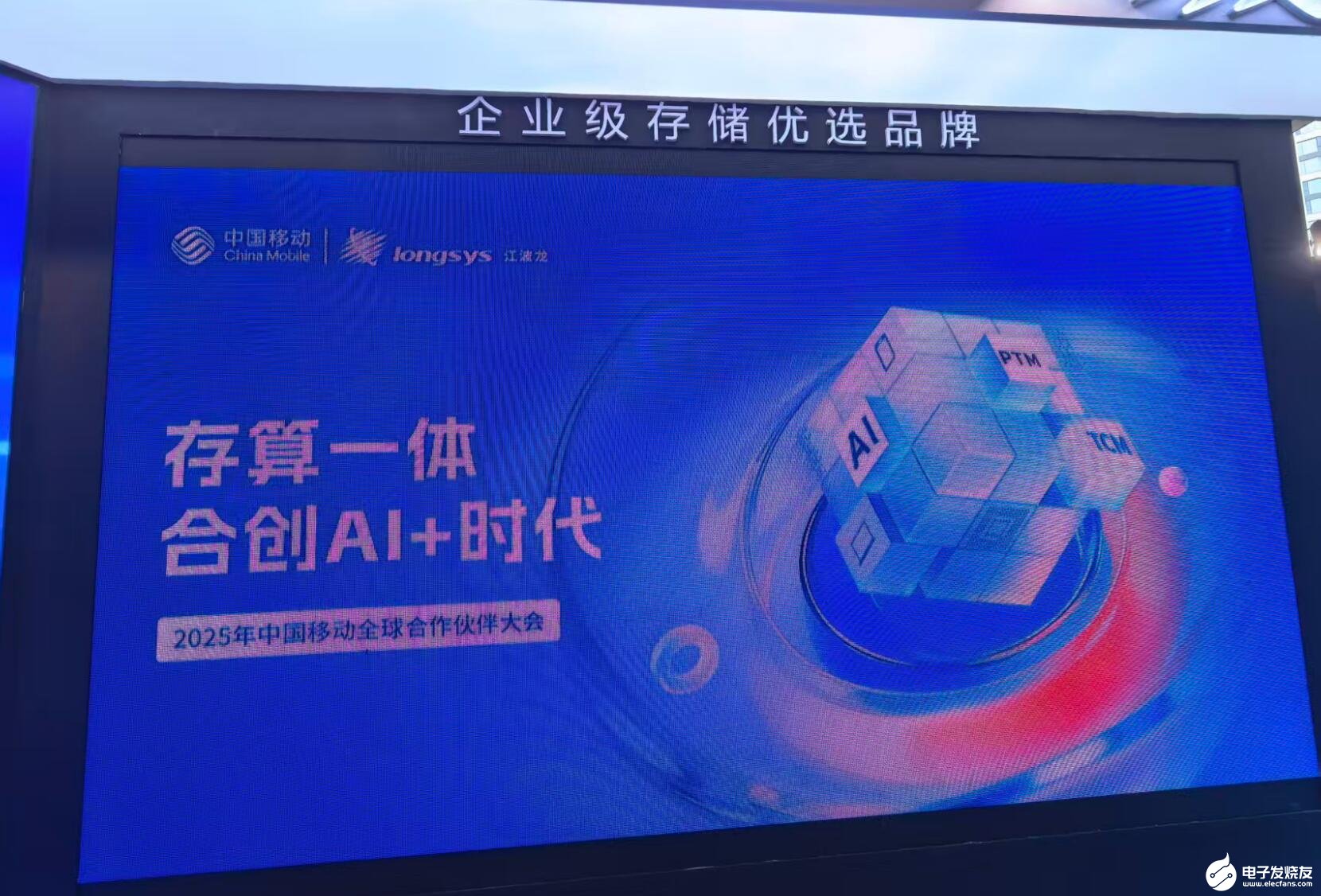
AI共創,江波龍攜AI存儲創新方案亮相2025數智科技生態大會

江波龍穿戴存儲全景布局,為AI眼鏡、手表“減負增智”
江波龍推出業內首款集成封裝mSSD,Office is Factory實現靈活、高效交付
強勢進入企業SATA SSD賽道!江波龍有哪些殺手锏,加入中移動產業鏈
江波龍自研UFS4.1主控芯片,順序讀取速率高達4350MB/s,性能對標主流產品

江波龍上海總部落成!以高端存儲”芯“支點鏈動全球化布局
是否可以保持與 SOM 的數據連接并將連接到 CYPD3177 的 CC 線路同時設置 USB 電壓?
上海車展高光時刻:江波龍首發車規級存儲新品 為汽車智能化添“芯”動力
深耕晶振行業22年,SCTF星通時頻只為干好一件事!



 工商網監
工商網監
評論