


 光印電路板制作過程,pcb making

光印電路板制作過程,pcb making
關(guān)鍵字:光印電路板制作過程
本文來自下面的連接:http://www.turbokeu.com/myprojects/pcb.htm
本文為國外朋友寫的光印電路板的制作過程,這種板子10年前就有了,想想當(dāng)年拜托別人將電路板文件打印到膠片時(shí)別人都不答應(yīng),收費(fèi)也貴,主要是當(dāng)時(shí)激光打印機(jī)太貴了,那時(shí)候光印電路板價(jià)格也貴,現(xiàn)在不知道價(jià)格是多少了,因?yàn)楹镁枚紱]有用了,現(xiàn)在主要采用熱轉(zhuǎn)印,當(dāng)然,光印也有自己的優(yōu)點(diǎn),就是制作方便,而且做出來的效果也相當(dāng)不錯(cuò),就是成本偏貴,有些偏遠(yuǎn)地方有可能買不到光印電路板。況且如果只制作一次,那么膠片就只用一次,這樣我是覺得有點(diǎn)浪費(fèi)膠片。
制作過程相當(dāng)簡(jiǎn)單,將電路板圖打印到膠片上,可以先不管正反面,(嚴(yán)格意義上做的話要講究正反面,因?yàn)槿绻疵娌粚?duì)的話,在做很細(xì)線條的時(shí)候效果不好。),在暴光時(shí)候別將正反面錯(cuò)了,因?yàn)槿绻疵媾e(cuò)了就相當(dāng)麻煩了。暴光時(shí)間大概是8分鐘左右就可以了,一般的光印電路板上都有說明要求。顯影的時(shí)候注意溶液濃度,千萬別過度顯影了。
本文介紹的腐蝕方法是三氯化鐵,我覺得這個(gè)容易因?yàn)楸容^黑,不容易看清楚,最好還是使用雙氧水與鹽酸配置,但是要注意濃鹽酸有揮發(fā)性,要注意通風(fēng)。
In answer to the frequently asked question about how I make my Printed Circuit Boards (PCB’s)
I make almost professionally looking PCB’s since years, the only thing I can’t do by myself is the silkscreen mask.
The basic PCB material I use is presensibilized with a UV sensible lacquer (available in most electronic stores).
You can also use non presensibilized PCB material and treat it with Positiv20 spray from Kontakt Chemie. De-oxidate and de-grease the raw PCB material with steel wool and aceton. Atomise a FINE layer of Positiv20 onto the copper and let the PCB dry for 24 hours in ambient room temperature, or about an hour at a maximum of 70°C (do not exceed! ). I do this inmy hot air electric oven in the kitchen.
The drying MUST be done in complete darkness! After that the PCB can be used as normal presensibilized PCB.
All you need is:
-
A software to develop your PCB layouts. I use the demo version of Circad’98 from Holophase because of its ease of use.
I also recently bought the cheap Sprint-Layout software from Abacom.
-
(Preferably) A laserprinter to print the darkest possible printouts of your PCB layout on transparent slides.
Ialways print out two identical and mirrored slides,so that the tonerside of the upper slide will be in direct contact with the UV-sensible lacquer side of the PCB material(against parasitic UV light between slide and lacquer), and staple themvery precisely together.
-
A UV-exposure unit to expose the PCB material to (short wave) UV light.
The optimal wave length should be between 370 and 440 nm, withmy Sylvania 350 blacklights that output their peak wave length at 356 nm, it works just fine. Beware these are no blacklights as we know from dancingclubs or case modding, the lamp is just white coated as any other TL lamp when it’s powered off. Powered on it emits a clear blue-ish light (very bad for your eyes!).
This is my DIY UV-exposure unit, equipped with 4x 20W TL tubes (the unit isalmost 20 years old now!).
In the meanwhile the timer on the picture has been replaced by my DIY microcontroller based timer.
The same results can be obtained with two tubes of 8 or 15W, only exposure timings will be longer.
Also, do not forget to preheat the lamps during 10 minutes to obtain their maximum light output.
To determine the "best" exposure time for the UV exposure I did the following:
- Take a slide with a PCB layout.
- Put a piece of cardboard on 9/10 of the surface.
- Expose for 1 minute.
- Move the cardboard to 8/10 of the surface.
- Expose for 1 more minute.
- Move the cardboard to 7/10 of the surface.
- Expose for 1 more minute. And so on...
- Develop the exposed PCB.
- Examine the results and decide for the best exposure time.
In my case the best exposure time is between 5 and 6 minutes, so I decided for 5min 30secs. I didn’t fail any PCB since then...
- A "tupperware " container to develop the exposed PCB.
After exposure the PCB has to be developed in a solution of sodiumhydroxide (NaOH + water).
Sodiumhydroxide under the form of pellets or flakes is also called caustic soda.
Pre-packaged bags of sodiumhydroxide to dilute in 1 liter of warm tapwater are available at most electronic stores. (I tried with caustic soda and water but it didn’t work out very well...I’ve found that either all or none of the lacquer dissolves)
Pour it into a "tupperware" container big enough to hold the PCB so that the developer is shallow.
You can see the PCB developing (the developer goes blue as soon as the exposed lacquer is dissolving) and the drawing of the layout will become clearly visible on the copper.
Rinse the PCB under flowing tapwater. The development should be finished within a minute (typically about 30 seconds at 20-25°C) After more than a few minutes the non exposed areas of the lacquer will begin to dissolve too.
The developer in the tupperware should be used only ONCE! (use fresh developer for every new PCB to develop)
-
A "tupperware" container to etch the PCB.
Etching of the PCB in a Ferric Chloride acid solution (Fe2CL3 + Water), available at electronics stores under the form of yellow-brownish grains to dilute in 1 liter of warm water, again in a "tupperware" container disposed in a "bain marie" (hot water recipient).
I use my kitchen sink filled with some hot water to obtain a temperature of about 50°C.
Ferric Chloride acid is more effective when its temperature rises, and therefore etching times decrease. Continuously moving the tupperware so that the etchant is flowing over the PCB also decreases drastically etching time. (with a fresh Ferric Chloride solution the etching time can go as low as 8-10 minutes).
- A metalsaw and a minidrill.
After the etching process the PCB has to be cut, filed and sandpapered to the right dimensions.
Drilling of the PCB holes (OMG, I hate this...), beginning with a 0.8mm drill (suitable for resistors, little capacitors, transistors, IC’s, to 1.0, 1.2 & 1.3mm for bigger components.
I use a 12 to 18V - 100W Maxicraft mini drill and the accompanying drill standard (very easy) powered by my PWM speed controller for mini drills project.
Some finished PCB’s:
Since the copper is still covered by the UV lacquer it’s protected against oxidation and moisture, and also the lacquer acts as a (not very good) solder flux when soldering the components to the PCB.
I prefer to remove the lacquer with aceton (ask your wife or girlfriend...), solder the components, and then treat the solder side with a spray varnish (I use transparent Plastic Spray 70 from Kontakt Chemie and green varnish from KF).
A few weeks ago I bought also a new TBM220 mini bench drill machine from Proxxonfor about 250 Euro.
Not cheap but very precise:
發(fā)布評(píng)論請(qǐng)先 登錄
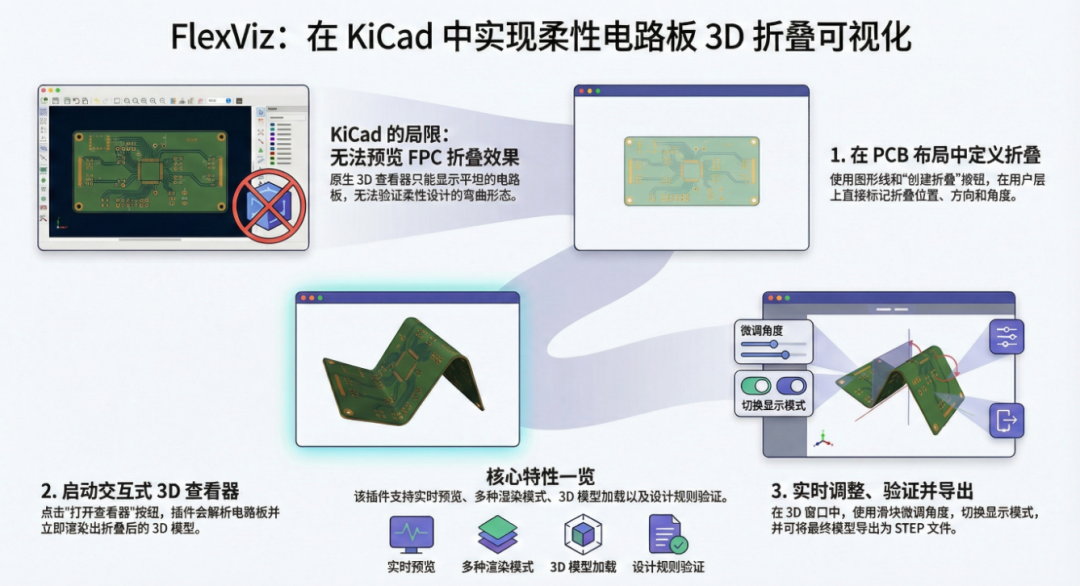
FlexViz:KiCad 柔性電路板 3D 折疊可視化插件
電路板三防漆有毒嗎
電路板離子污染的核心危害和主要來源
如何選擇合適的高頻PCB電路板制造商?
印刷電路板(PCB)翹曲問題及其檢測(cè)技術(shù)

PCB翹曲不用愁!| 鑫金暉壓板烘箱專治電路板卷翹異常,高效節(jié)能熱壓整平

PCB電路板失效分析儀 機(jī)械應(yīng)力測(cè)量系統(tǒng)
各位大神,請(qǐng)教機(jī)械式光開關(guān)的制作過程
印刷電路板 PCB 與印刷線路板 PWB 區(qū)別
射頻電路板設(shè)計(jì)技巧

警惕靜電:電路板的隱形殺手? ?
多板 PCB 組裝中最常見的邏輯錯(cuò)誤




 工商網(wǎng)監(jiān)
評(píng)論