


 著名的 Box86/Box64 模擬器現在有了更好的 RISC-V RVV 1.0 支持,性能提升顯著

部分機器翻譯。轉載自:https://box86.org/2024/10/optimizing-the-risc-v-backend/
大家好!一個半月前,我們撰寫了關于 RISC-V DynaRec(動態重編譯器,即 Box64 的 JIT 后端)的最新狀態的文章,并分享了在 RISC-V 上運行《巫師 3》的令人欣慰的進展。如果您還沒有看過那篇文章,千萬不要錯過!無論如何,上個月,我們并沒有只是坐在那里無所事事,而是專注于性能改進,現在我們有一些東西可以分享了。
Are We SIMD Yet?
多年來,x86 指令集慢慢擴展了大量 SIMD 指令,分散在多個 SIMD 擴展中,從最初的 MMX 到 SSE、SSE2、SSE3、SSSE3、SSE4,再到 AVX、AVX-2、AVX-512 以及即將推出的 AVX10。您可能已經猜到,這些指令一定有廣泛的應用,值得對編碼空間產生如此大的影響。
事實上,由于現代編譯器的存在,如今幾乎所有 x86 程序或多或少都會使用 SIMD 指令。特別是,一些性能敏感且并行友好的程序將在熱代碼路徑中使用手寫 SIMD 內核,以大幅提高性能。因此,box64 需要有效地翻譯這些指令。
幸運的是,x86 并不是唯一一個擁有 SIMD 或矢量擴展的指令集。它是如此重要,以至于幾乎所有的指令集都有它。例如,AArch64 有 Neon、SVE和 SVE2,LoongArch 有 LSX 和 LASX,RISC-V 有 Vector 擴展(或 RVV)。本質上,這些擴展的目標是相同的,即加速并行友好代碼的執行。因此,即使它們有這樣或那樣的差異,它們通常是相似的,許多基本指令是完全相同的,因此可以通過 box64 等模擬器一對一地翻譯。
那么 box64 對這些 x86 SIMD 指令的支持程度如何?嗯,這是一個復雜的問題。例如,目前最完整的 AArch64 DynaRec 支持從 MMX 到 AVX-2 的幾乎所有指令。簡單來說,這些指令將被翻譯成一個或多個 Neon 指令來完成等效的工作。同時,最不完整的LoongArch64 DynaRec目前僅支持一小部分MMX和SSE*指令,未實現的操作碼將回退到解釋器,速度非常慢。
So, what about our beloved RISC-V? Are we SIMD yet?
嗯,一個半月前,答案是否定的。RISC-V DynaRec 確實實現了從 MMX 到SSE4的大多數指令,但這些指令是用標量指令模擬的。
For example, for the SSE2paddqopcode, what this instruction does is:
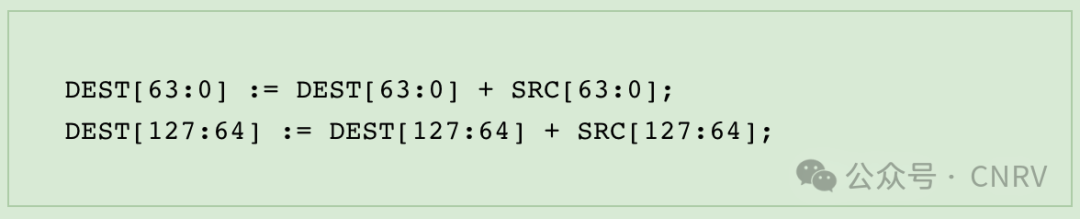 So how is it emulated on RISC-V? Let’s take a look at it via the dump functionality of Box64:
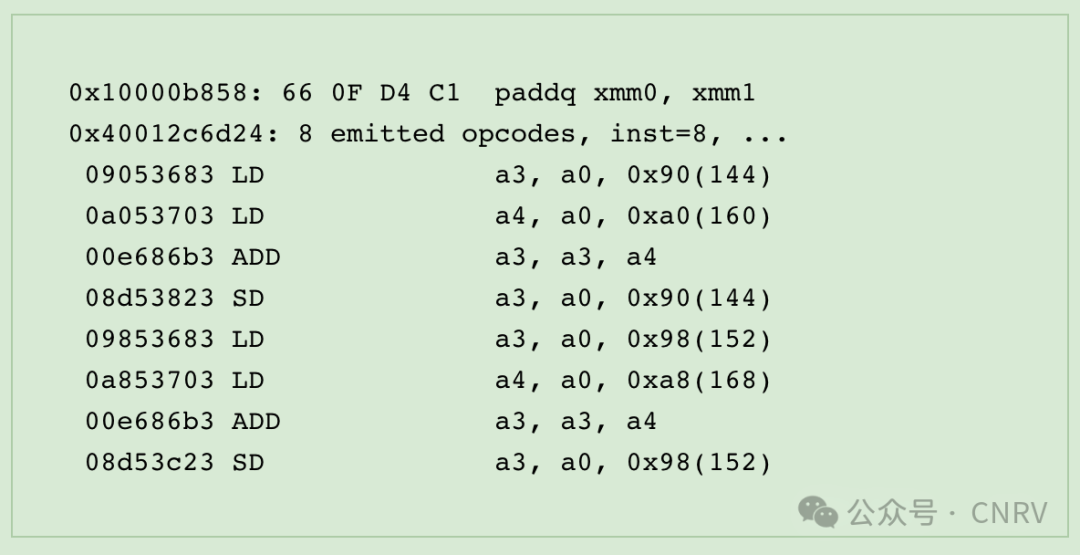
You can see that the translation is implemented by twoLOAD LOAD ADD STOREsequences, totaling 8 instructions. This is probably the easiest opcode to simulate so it will be even worse for other more complex opcodes.
So how is this implemented on AArch64?
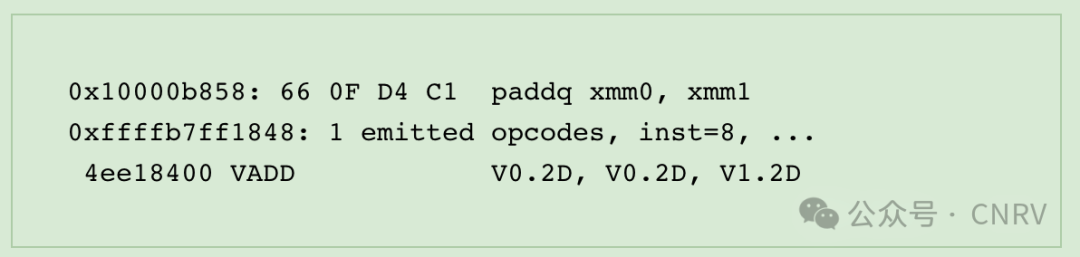
Ah ha, this opcode is translated one-to-one to theVADDinstruction! No surprises at all.
可以想象,在 RISC-V 上,這種方法確實會比簡單地回退到解釋器有更好的性能,但與手頭有 Neon 指令的 AArch64 相比,它就差遠了。
RISC-V 指令集以多樣性而聞名(如果你討厭 RISC-V,你也可以說是碎片化)。這意味著除了基本指令集之外,供應商還有充分的自由來實現或不實現官方擴展,以及添加或不添加自定義擴展。
你看,在 AArch64 中,Neon 擴展是強制性的,因此 box64 可以隨意使用它,無需擔心它的存在。但RVV卻大不相同。例如,JH7110(VisionFive 2、MilkV Mars 等)沒有任何矢量擴展,而 SpacemiT K1/M1(Banana Pi F3、MilkV Jupiter 等)支持矢量寄存器寬度為 256 位的 RVV 1.0,SG2042(MilkV Pioneer)支持舊 RVV 版本 0.7.1(或 XTheadVector),寄存器寬度為 128 位。
In fact, the one on SG2042 is not strictly 0.7.1, but based on 0.7.1, that why it is called XTheadVector. Although it has some differences with RVV 1.0, such as the encoding of instructions, the behavior of some instructions, and the lack of a small number of instructions, it is generally very similar.
Anyway, on RISC-V we cannot assume that RVV (or XTheadVector) is always present, so using a scalar implementation as a fallback is reasonable and necessary.
But for a long time, the RISC-V DynaRec only had a scalar solution, which was a huge waste of hardware performance for hardware with RVV (or XTheadVector) support, until recently.Yes, in the past month, we added preliminary RVV and XTheadVector support to the RISC-V backend!Also, we managed to share most of the code between RVV 1.0 and XTheadVector, so no additional maintenance burden for supporting 2 extensions at once.
Ohhhh, I can’t wait, let me show you what thatpaddqlooks like now!
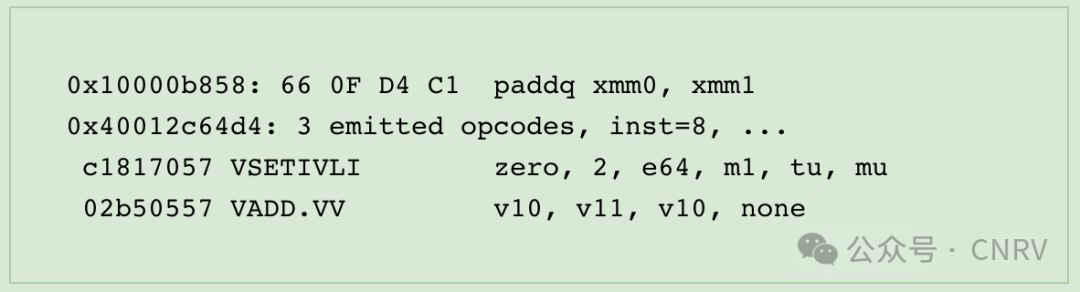
Hmmm, okay, it looks much nicer. But, you may ask, what the heck is thatVSETIVLI? Well… that’s a long story.
In “traditional” SIMD extensions, the width of the selected elements is encoded directly into the instruction itself, e.g. in x86 there is not onlypaddqfor 64bit addition, but alsopaddb,paddwandpadddfor 8bit, 16bit and 32bit respectively.
In RVV, on the other hand, there is only 1 vector-wise addition instruction, which isvadd.vv. The selected element width (SEW) is instead stored in a control register calledvtype, and you need to use the dedicatedvsetivliinstruction to set the value ofvtype. Every time a vector instruction is executed, thevtyperegister must be in a valid state.
In the abovevsetivliinstruction, we essentially set the SEW to 64bit along with other configurations. However, inserting avsetivlibefore every SIMD opcode doesn’t sound like a good idea. Ifvtypedoes not need to change between adjacent opcodes, we can safely eliminate them. And that’s how we did it in Box64.
Look at these dumps:
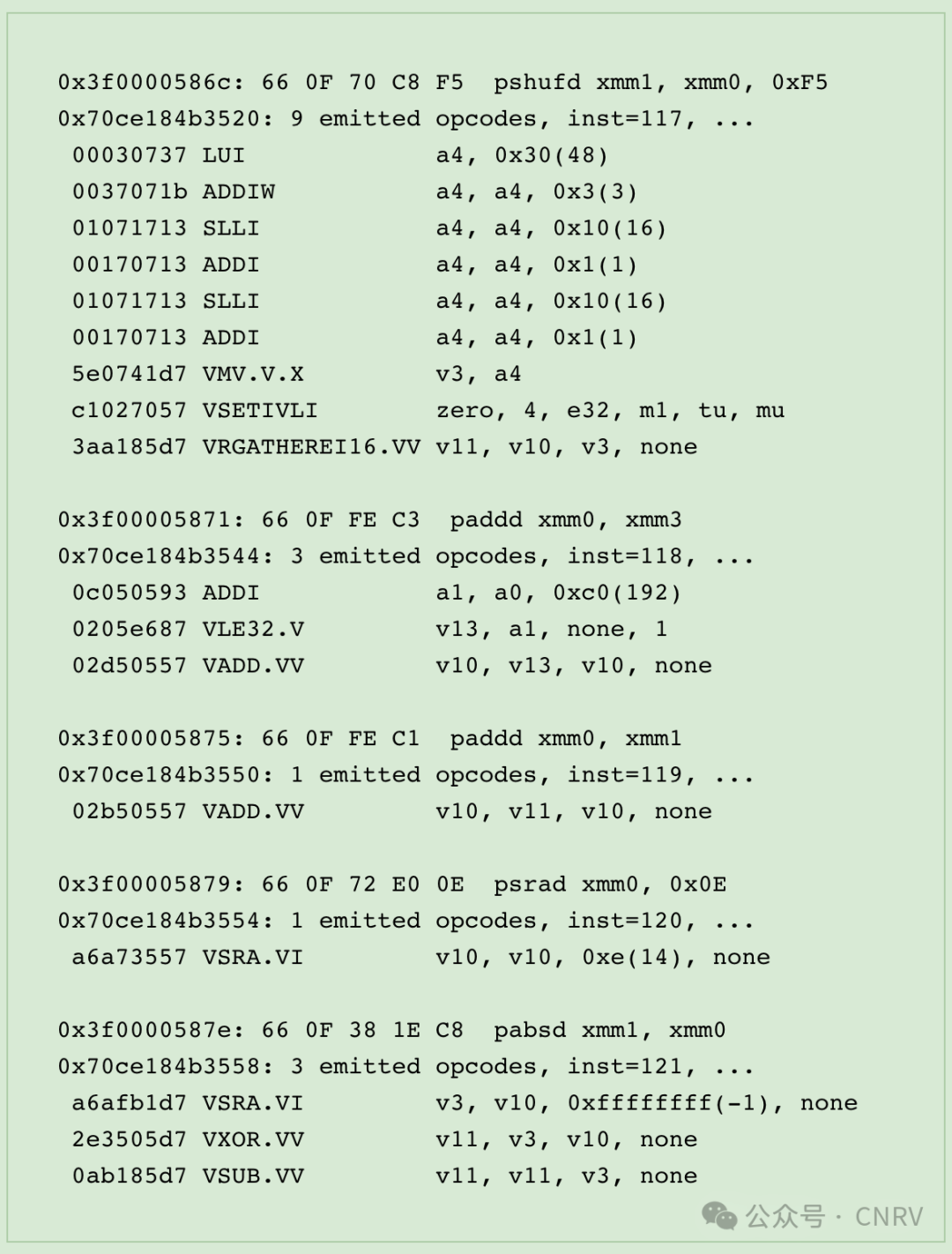
You can see that among the 5 SSE opcodes, as the actual SEW has not changed, we only callvsetivlionce at the top. We achieved this by adding a SEW tracking mechanism to the DynaRec and only insertingvsetvliwhen it’s necessary. This tracking not only includes the linear part but also considers control flow. A lot of state caching in box64 is done using a similar mechanism, so nothing new here.
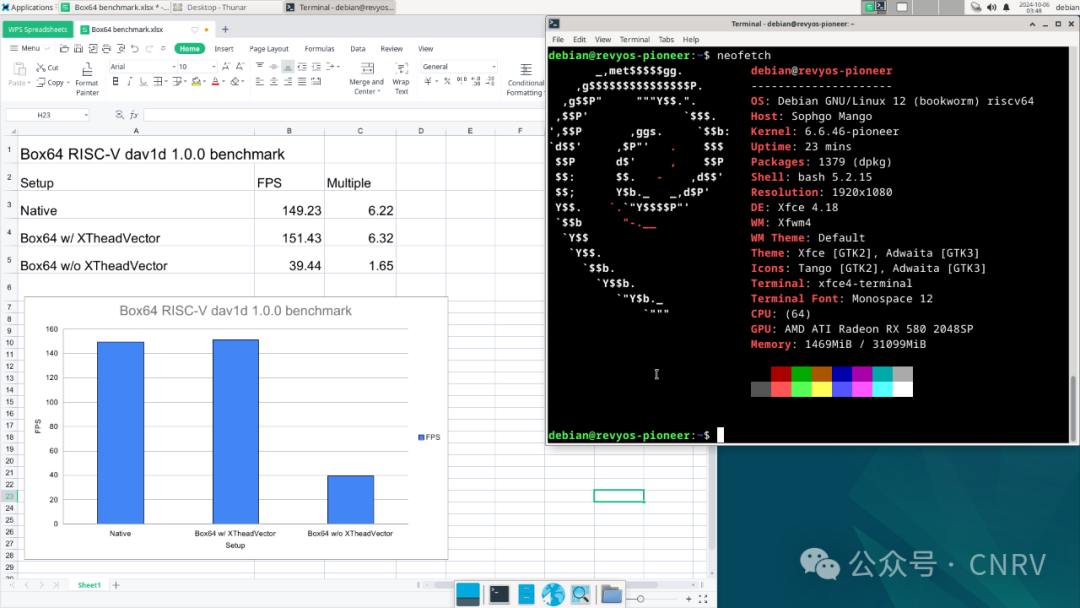
For now, we haven’t implemented every x86 SIMD instruction in RVV / XTheadVector, but we implemented enough of them to do a proper benchmark. By tradition, we use the dav1d AV1 decoding benchmark as a reference, which happens to use SSE instructions a LOT, and here is the command we used:
dav1d -i ./Chimera-AV1-8bit-480x270-552kbps.ivf --muxer null --threads 8
We did the test on the MilkV Pioneer, which has the XTheadVector extension.
We also tested RVV 1.0 with the SpacemiT K1, the result is more or less the same.
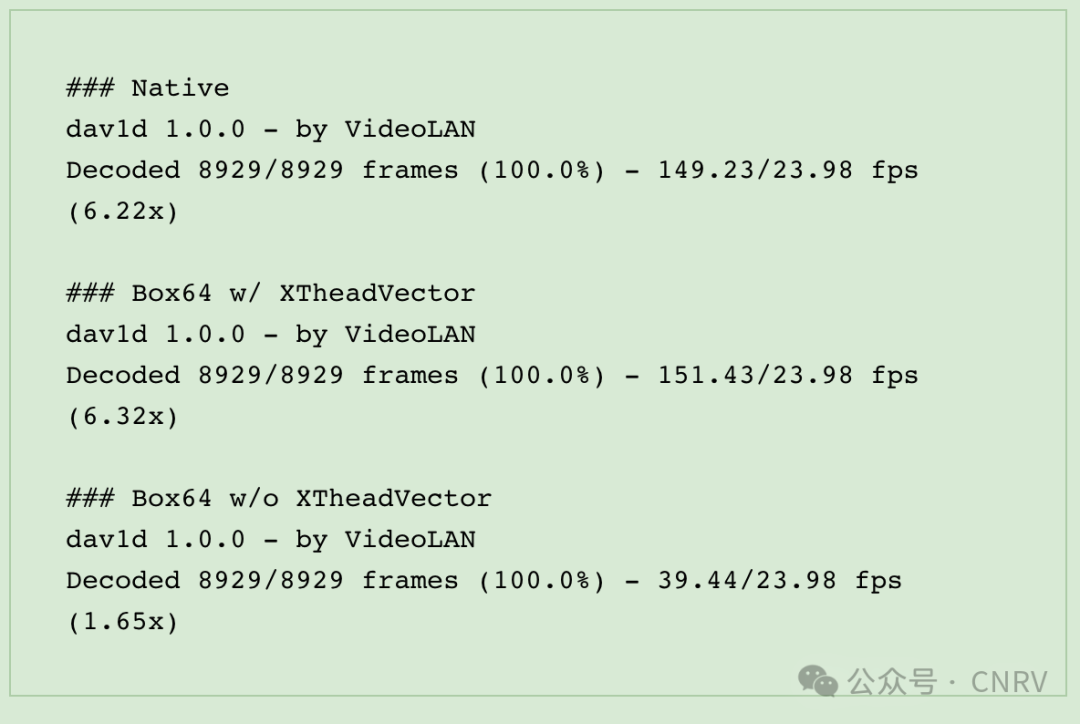
Compared to the scalar version, we get a nearly 4x performance improvement! Even faster than native! Ugh… well, the faster-than-native part is more symbolic. The comparison is meaningful only if native dav1d fully supports XTheadVector, which the native dav1d does not support at all.
Last But Not Least
In thelast post, we complained about RISC-V not having bit range insert and extract instructions, and therefore not being able to efficiently implement things like 8bit and 16bit x86 opcodes.camel-cdrcame up with a great solution:https://news.ycombinator.com/item?id=41364904. Basically, for anADD AH, BL, you can implement it using the following 4 instructions!
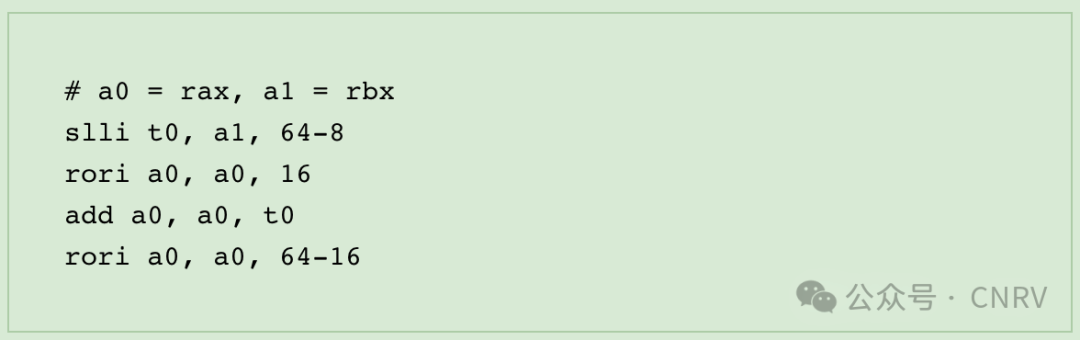
The core idea is to shift the actual addition to the high part to eliminate the effect of the carry, which is a pretty neat trick. And it can be applied to almost all of the 8-bit and 16-bit opcodes when there is noeflagscomputation required, which covers most scenarios. We have adopted this approach as a fast path to box64. Thank you very muchcamel-cdr!
This method requires an instruction from the Zbb extension calledRORI(Rotate Right Immediate). Fortunately, at least all the RISC-V hardware I own provides this extension, so it’s commonly available. (Well, SG2042 does not have Zbb, but it has an equivalent instructionTH.SRRIin the XTheadBb extension).
We also found that in the XTheadBb extension, there is aTH.EXTUinstruction, which did the bit extract operation. We’ve adapted this instruction to some places too, for example, the indirect jump table lookup — when box64 DynaRec needs to jump out of the current dynablock to the next dynablock, it needs to find where the next is.
In short, there are two cases. The first is a direct jump, that is, the jump address is known at compile time. In this case, box64 can directly query the jump table at compile time to obtain the jump address and place it in the built-in data area of dynablock, which can be used directly when jumping at runtime, no problem there.
The second is an indirect jump, that is, the jump address is stored in a register or memory and is unknown at compile time. In this case, box64 has no choice but to generate code that queries the jump table at runtime.
The lookup table is a data structure similar to page table, and the code for the lookup is as follows:
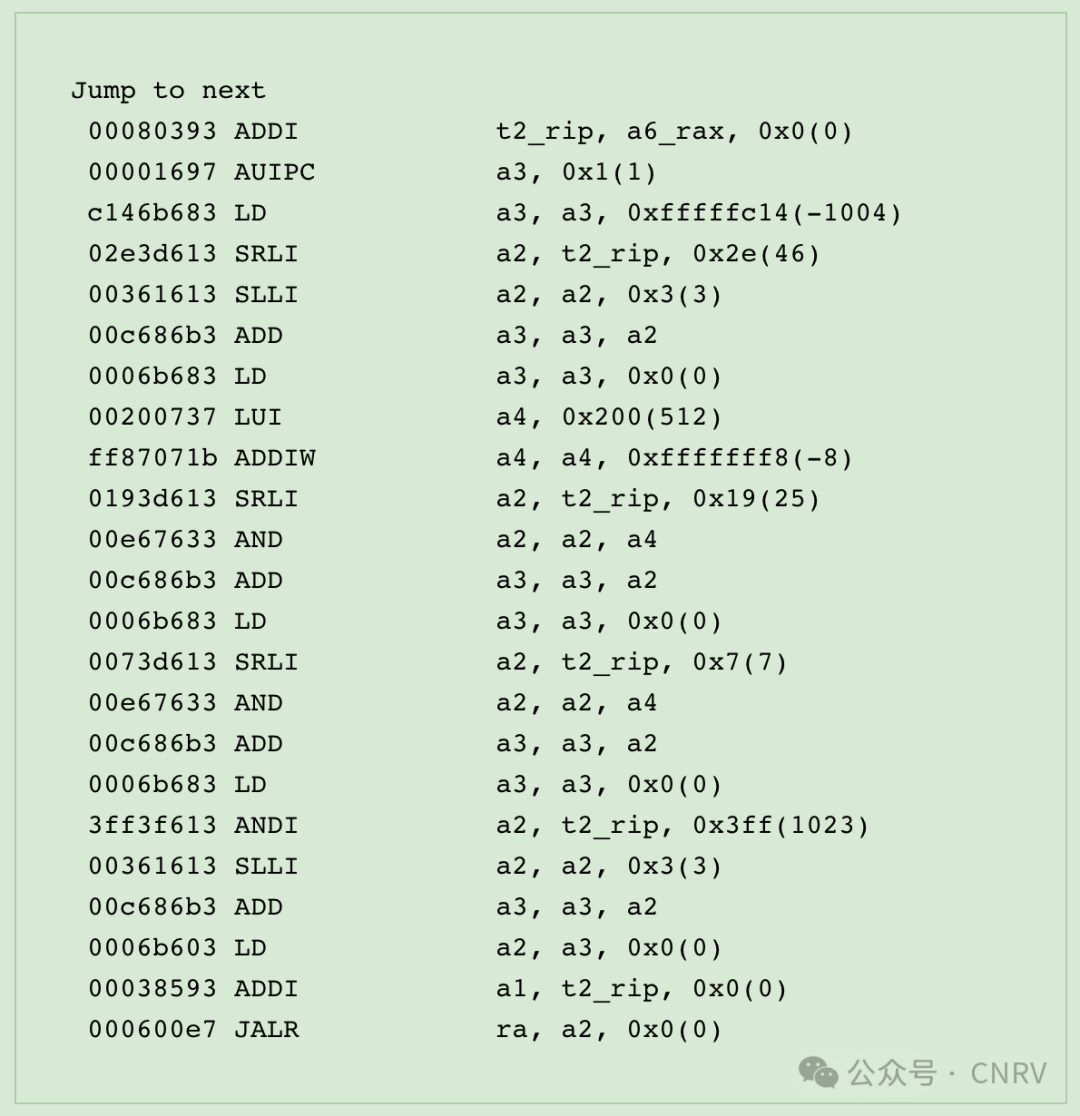
Hmmm, I know, it’s hard to see what’s happening there, but it seems like a lot of instructions there for a jump, right? But withTH.ADDSLandTH.EXTUfrom XTheadBb, it becomes:
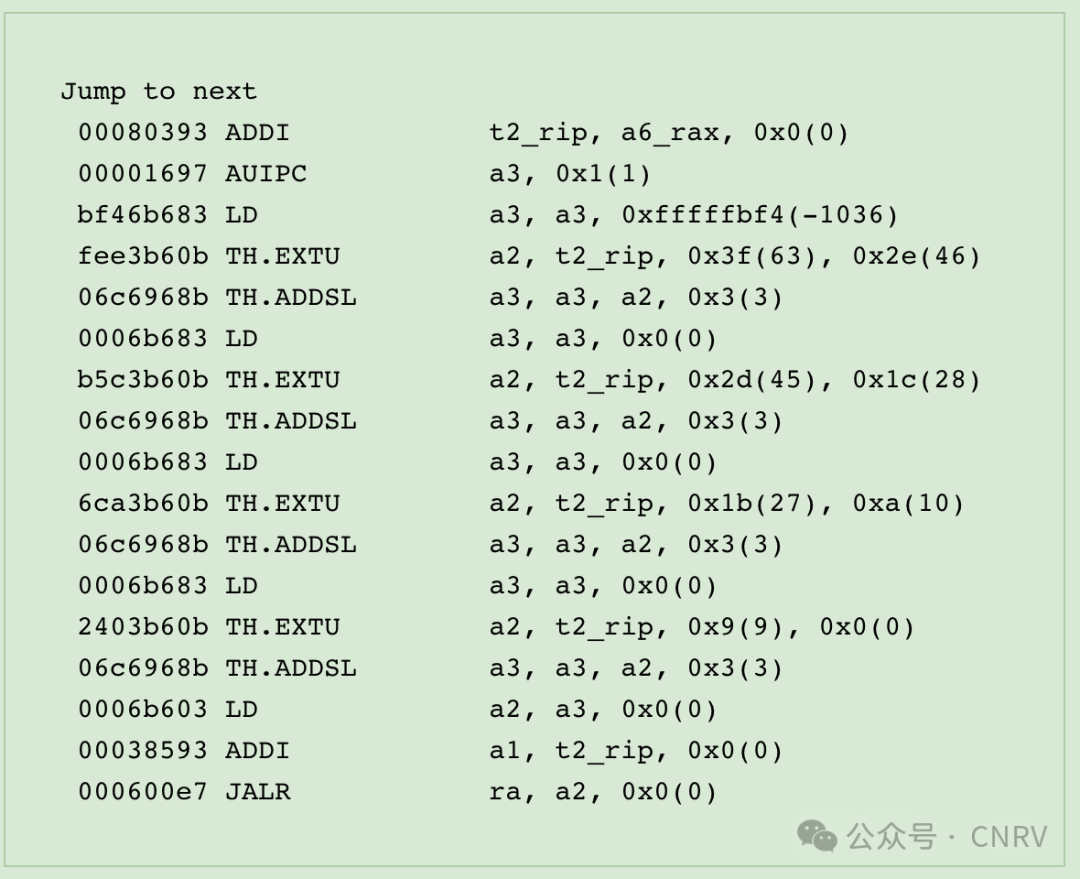
Now it’s much more readable; you should be able to see that this is a 4-layer lookup table, and the number of instructions required has also been reduced a bit.
Okay, all these optimizations look good, but does it show effects in real-world benchmarks? Well, we tested 7z b, dav1d and coremark, and there are no visible differences in the scores with or without XTheadBb. But, a quote from theSQLite website:
A microoptimization is a change to the code that results in a very small performance increase. Typical micro-optimizations reduce the number of CPU cycles by 0.1% or 0.05% or even less. Such improvements are impossible to measure with real-world timings. But hundreds or thousands of microoptimizations add up, resulting in measurable real-world performance gains.
So, let’s do our best and hope for the best!
In the End
Well, this is the end of this post, but it is not the end of optimizing the RISC-V DynaRec, we’ve barely started!
Next, we’ll add more SSE opcodes to the vector units, as well as MMX opcodes and AVX opcodes, and we will make the RISC-V DynaRec as shiny as the AArch64 one!
So, a bit more work, and we can have a look again at gaming, with, hopefully, playable framerates and more games running so stay tuned!
-
編譯器
+關注
關注
1文章
1672瀏覽量
51810 -
模擬器
+關注
關注
2文章
1017瀏覽量
45759 -
RISC-V
+關注
關注
49文章
2926瀏覽量
53352
發布評論請先 登錄
RISC-V不支持 Nx嗎?
RISC-V,正式崛起

探索RISC-V在機器人領域的潛力
為什么RISC-V是嵌入式應用的最佳選擇
提高RISC-V在Drystone測試中得分的方法
RISC-V B擴展介紹及實現
PIC64GX1000 RISC-V MPU:一款面向嵌入式計算的高性能64位多核處理器
全球首款RiSC-V企業級模擬平臺,躍昉科技LeapEMU正式亮相

【Milk-V Duo S 開發板免費體驗】RISC-V核心NCNN基準測試
【Milk-V Duo S 開發板免費體驗】RISC-V核性能測試
知合計算:RISC-V架構創新,阿基米德系列劍指高性能計算
阿里巴巴達摩院劉志偉:QEMU RISC-V 的進展、特性與未來規劃

RISC-V 發展態勢與紅帽系統適配進展

RISC-V生態又一里程碑!Debian官宣支持RV64
T-BOX硬件方案解析:STM32與SD NAND芯片的高效協同




 工商網監
工商網監
評論