


 信號尋跡器/信號發生器(英文),Pulse-Generator & Signal-Tracer

信號尋跡器/信號發生器(英文),Pulse-Generator & Signal-Tracer
關鍵字:信號尋跡器/信號發生器
Circuit diagram
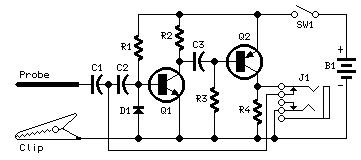
Parts:
R1 1M 1/4W Resistor
R2,R4 2K7 1/4W Resistors
R3 150K 1/4W Resistor
C1 2n2 630V Ceramic or Polyester Capacitor (See Notes)
C2,C3 4n7 63V Ceramic or Polyester Capacitors
D1 1N4148 75V 150mA Diode
Q1 BC547 45V 100mA NPN Transistor
Q2 BC557 45V 100mA PNP Transistor
SW1 SPST miniature Slider Switch (See Notes)
J1 Stereo switched 3mm. Jack socket (See Notes)
Probe Metal Probe 3 to 5 cm. long
Clip Miniature Crocodile Clip
B1 1.5V Battery (AA or AAA cell etc.)
R1 1M 1/4W Resistor
R2,R4 2K7 1/4W Resistors
R3 150K 1/4W Resistor
C1 2n2 630V Ceramic or Polyester Capacitor (See Notes)
C2,C3 4n7 63V Ceramic or Polyester Capacitors
D1 1N4148 75V 150mA Diode
Q1 BC547 45V 100mA NPN Transistor
Q2 BC557 45V 100mA PNP Transistor
SW1 SPST miniature Slider Switch (See Notes)
J1 Stereo switched 3mm. Jack socket (See Notes)
Probe Metal Probe 3 to 5 cm. long
Clip Miniature Crocodile Clip
B1 1.5V Battery (AA or AAA cell etc.)
Device purpose:
This simple circuit generates narrow pulses at about 700-800Hz frequency. The pulses, containing harmonics up to the MHz region, can be injected into audio or radio-frequency stages of amplifiers, receivers and the like for testing purposes. A high-pitched tone can be heard from the speaker of the device under test when all is working properly. The clip must be connected to the ground of the device under test, touching with the probe the different stages of the circuit, starting from the last stage and going up towards the first. When the tone is no longer heard, the defective stage has been found.
Connecting an earclip or headphone to J1, the circuit will automatically change into a two-stage amplifier and any audio signal coming from the device under test and picked-up by the probe will be heard through the headphones. The testing of a circuit should be made in the reverse manner, i.e. starting from the first stage and going down until the last stage. When nothing is heard, the defective stage has been found.
This simple circuit generates narrow pulses at about 700-800Hz frequency. The pulses, containing harmonics up to the MHz region, can be injected into audio or radio-frequency stages of amplifiers, receivers and the like for testing purposes. A high-pitched tone can be heard from the speaker of the device under test when all is working properly. The clip must be connected to the ground of the device under test, touching with the probe the different stages of the circuit, starting from the last stage and going up towards the first. When the tone is no longer heard, the defective stage has been found.
Connecting an earclip or headphone to J1, the circuit will automatically change into a two-stage amplifier and any audio signal coming from the device under test and picked-up by the probe will be heard through the headphones. The testing of a circuit should be made in the reverse manner, i.e. starting from the first stage and going down until the last stage. When nothing is heard, the defective stage has been found.
Circuit operation:
Q1 & Q2 form a complementary astable multivibrator, whose operating frequency is set mainly by R3, C2 & C3 values. Output pulses are taken at Q2 Collector and applied to the probe by means of decoupling capacitor C1. D1 provides a symmetrical shape for the output waveform.
If an earclip or headphone jack is plugged into J1, the connection from Q2 Collector and C1-C2 is broken by the switch incorporated into J1: in this case the circuit becomes a two-stage amplifier.
Q1 & Q2 form a complementary astable multivibrator, whose operating frequency is set mainly by R3, C2 & C3 values. Output pulses are taken at Q2 Collector and applied to the probe by means of decoupling capacitor C1. D1 provides a symmetrical shape for the output waveform.
If an earclip or headphone jack is plugged into J1, the connection from Q2 Collector and C1-C2 is broken by the switch incorporated into J1: in this case the circuit becomes a two-stage amplifier.
Notes:
If you intend to use the circuit to test valve operated devices C1 must be a 630V type. Working with low voltage supply transistor devices the voltage of C1 can be lowered to 63 or 100V.
If instead of a short probe, you intend to connect the circuit to the device under test by means of a piece of wire longer than a few centimeters, a small ceramic capacitor (470 to 1000pF) should be added in parallel to D1 to prevent unwanted RF oscillation.
Current drawing when in Pulse-Generator mode is about 60?μA & 1.2mA when in Signal-Tracer mode operation. Therefore SW1 can be omitted, provided that the earclip or headphones are unplugged when the circuit is unused.
J1 is a stereo switched jack socket wired to obtain a series connection of the two earpieces forming a stereo headphone. In this manner the circuit is loaded with a higher impedance and sensitivity will be improved.
Therefore, the higher the load impedance the more sensitive the Signal-Tracer. In any case, common 32 Ohm impedance mini-headphones suitable for walkman sets will work fine.
A crystal (high impedance) earpiece is a good solution, provided you substitute J1 with a mono switched jack socket.
The entire circuit can be easily fitted into a pen-like enclosure, with the probe protruding like a nib.
If you intend to use the circuit to test valve operated devices C1 must be a 630V type. Working with low voltage supply transistor devices the voltage of C1 can be lowered to 63 or 100V.
If instead of a short probe, you intend to connect the circuit to the device under test by means of a piece of wire longer than a few centimeters, a small ceramic capacitor (470 to 1000pF) should be added in parallel to D1 to prevent unwanted RF oscillation.
Current drawing when in Pulse-Generator mode is about 60?μA & 1.2mA when in Signal-Tracer mode operation. Therefore SW1 can be omitted, provided that the earclip or headphones are unplugged when the circuit is unused.
J1 is a stereo switched jack socket wired to obtain a series connection of the two earpieces forming a stereo headphone. In this manner the circuit is loaded with a higher impedance and sensitivity will be improved.
Therefore, the higher the load impedance the more sensitive the Signal-Tracer. In any case, common 32 Ohm impedance mini-headphones suitable for walkman sets will work fine.
A crystal (high impedance) earpiece is a good solution, provided you substitute J1 with a mono switched jack socket.
The entire circuit can be easily fitted into a pen-like enclosure, with the probe protruding like a nib.
Author: RED Free Circuit Designs
聲明:本文內容及配圖由入駐作者撰寫或者入駐合作網站授權轉載。文章觀點僅代表作者本人,不代表電子發燒友網立場。文章及其配圖僅供工程師學習之用,如有內容侵權或者其他違規問題,請聯系本站處理。
舉報投訴
發布評論請先 登錄
相關推薦
熱點推薦
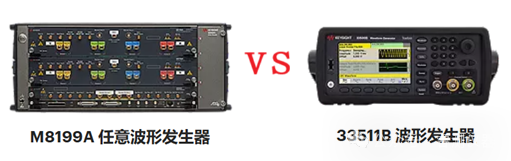
函數信號發生器和任意波形信號發生器區別詳解
函數發生器提供了一個預置列表,里面列出了它可以生成的波形或碼型。 在函數發生器中,用戶可以更改頻率、幅度和偏移等波形參數,還可添加簡單的失真。 任意波形發生器更為復雜,能夠仿真真實世界中的信號



SGT100A SMW200A矢量信號發生器
R&S?SGT100A是羅德與施瓦茨公司推出的高性能緊湊型矢量信號發生器,專為生產測試和自動化應用設計,集快速響應、卓越信號質量和緊湊設計于一體,是1 HU (1.75 英寸高
信號發生器的構成和工作原理
信號發生器作為現代電子測試與測量領域中的關鍵設備,其精密的構造和巧妙的工作原理使之能夠產生各種所需的電信號。本文將深入探討信號發生器的構成及







 工商網監
工商網監
評論